2026-3-3 03:00 |
Prediction markets have widely transformed from small-scale experiments into strong financial tools processing billions of dollars just in per-week trading volume. They permit consumers to speculate on diverse real-world outcomes with the use of decentralized infrastructure rather than conventional betting entities or brokers. With the advancement of L2 scaling, cutting-edge blockchain oracles, and AI-led trading agents, these markets have become more accurate, cheaper, and faster than before. This guide elaborates on the working of blockchain prediction markets and their significance in shaping finance and information’s future.
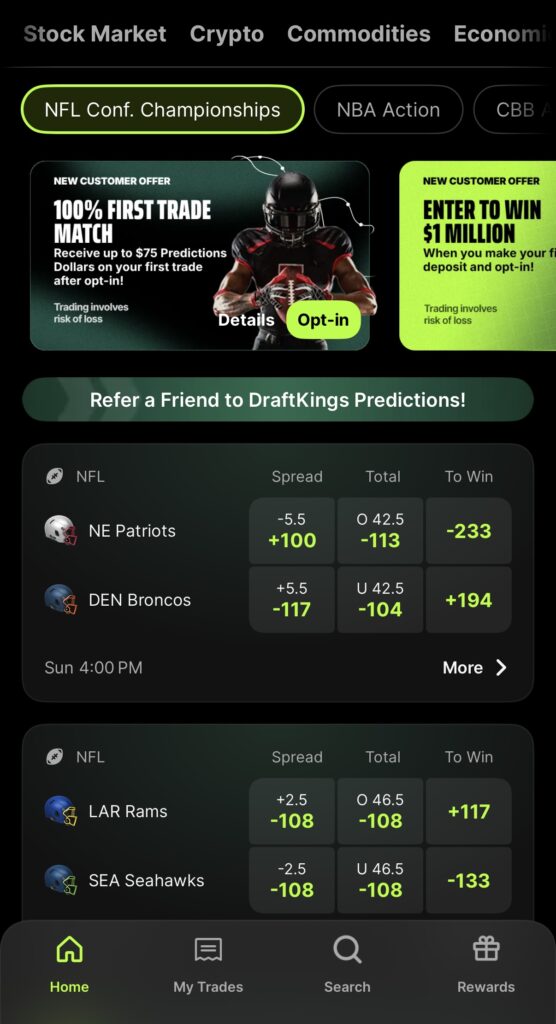
IntroductionA prediction market serves as a trading ecosystem that permits participants to sell and buy contracts in line with the outcomes of the events to occur in the future. Rather than trading stocks, cryptocurrencies, or commodities, consumers trade on questions. These questions take into account “who will triumph in a key election?,” “will inflation surpass a specific level?,” and “will interest rates fall or rise?.” shares present each of such outcomes, normally labeled “No” or “Yes.” If a person’s prediction is correct, their share eventually settles at a predefined value, usually $1.
However, in the case of a wrong prediction, the share ultimately becomes worthless. Each share’s price fluctuates in line with the market sentiment. For instance, if exclusive economic data highlights a fall in the inflation, contracts anticipating the interest rate cut are tend to immediately rise in value. This dynamic pricing makes prediction markets real-time probability indicators reflecting collective anticipations.
Potential of Prediction MarketsPrediction markets are often more accurate in comparison with conventional expert forecasts or polling. In this respect, the participants need to put their funds behind what they believe. This financial incentive promotes research-based and honest predictions instead of opinions. The main benefits of prediction markets take into account crowd intelligence, financial accountability, and real-time updates.
Hence, numerous traders contribute information, establishing a relatively balanced forecast in comparison with a single analyst. Additionally, traders lose their funds if they make a wrong prediction. This discourages misinformation. Additionally, prices instantly react to the notable news events. Due to this, noteworthy financial analysts and media outlets increasingly refer to prediction market odds, categorizing them as market-based probabilities into the case of real-world events.
Blockchain’s Role in Transforming Prediction MarketsConventional prediction entities depend on centrally controlled operators that keep consumer funds, determine outcomes, and set rules. However, blockchain technology leverages smart contracts instead of the respective mediators. These are self-executing codes that are deployed on decentralized ecosystems.
Additionally, decentralized prediction markets operate on distributed blockchain nodes. So, no single entity is capable of shutting them down, manipulating outcomes, or censoring trades. The system remains working as long as the primary blockchain exists. At the same time, smart contracts automatically tackle trade execution, payout distribution, and fund custody. Consumers do not require relying on an entity to keep their funds. Additionally, the code efficiently and transparently enforces the rules.
Apart from that, the L2 blockchain solutions permit rapid trade settlement, increasing throughput when it comes to event trading, and significantly low transfer costs. As a result of this, decentralized prediction markets become competitive with conventional financial trading and sports betting platforms. Moreover, anyone having a crypto wallet and an internet connection can theoretically be a part of the prediction markets. This unlocks prediction markets for a worldwide consumer base, though front-end apps may impose an access restriction in specific jurisdictions for compliance with regional regulations.
Contribution of Blockchain OraclesA crucial challenge that the prediction markets face is evaluating an event’s final outcome. Blockchains cannot actually reach real-world data; thus, they depend on oracles, which serve as data bridges and feed validated real-world information into diverse smart contracts for the correct settlement of the markets.
Latest oracle advancements have substantially improved their reliability. These advancements take into account decentralized reporting, AI-powered verification, and dispute resolution mechanisms. Particularly, multiple participants can stake tokens for the submission of outcomes. Additionally, the digital courts or token-holder voting resolve disagreements. At the same time, AI agents now scan data sources, APIs, and news outlets to confirm results in no time. These mechanisms guarantee fairness, enable quicker settlement times, and minimize manipulation risk.
AI Agents and Prediction MarketsNowadays, artificial intelligence is also significantly contributing to the decentralized forecasting. Hence, AI agents can analyze large volumes of economic and news data. Additionally, they can automatically execute trades, inject liquidity into the market, and detect pricing inefficiencies. AI can process information more rapidly than humans and help enhance market accuracy and mispriced probabilities. This develops a hybrid ecosystem at the intersection of machine analysis and human intuition.
Present Market LandscapeAt the moment, blockchain prediction markets have broadened across diverse ecosystems and networks. Though the early activity focused on just a few entities, the trading volume has now expanded across many blockchains. Several ecosystems have even surpassed the $20B mark when it comes to total trading volume, showing solid global demand. Additionally, in DeFi, prediction market positions are now used in the form of loan collateral. Along with that, they are merged with different yield strategies. Moreover, they are leveraged as hedging instruments to efficiently offset likely losses in conventional markets.
Regulatory and Legal ConsiderationsIrrespective of technological progress, the prediction markets are still being treated differently across different regions. Some areas categorize prediction markets among financial derivatives, while in others, they are still considered gambling products. Apart from that, some platforms ban access to these markets in line with the local laws. Particularly, in the U.S., some entities have eventually won legal fights permitting event trading to a certain extent. Nevertheless, globally, the wider regulatory framework is going through a continuous evolution phase. Thus, consumers must verify regional compliance ahead of participating.
Road Ahead for Prediction MarketsLooking ahead, many trends could shape the next era of growth in the prediction market landscape. Comprehensive AI integration could be crucial to automate forecasting. Moreover, cross-chain liquidity aggregation and the institutional use cases are also set to evolve over time. Furthermore, the inclusion of improved regulatory agendas could provide legal clarity. Overall, despite the usability and regulatory challenges at the moment, decentralized prediction markets are expected to substantially contribute to the future of global finance and data-led decision-making.
ConclusionIn conclusion, blockchain prediction markets are rapidly evolving into powerful tools for forecasting real-world events by combining decentralized infrastructure, transparent smart contracts, reliable oracle systems, and AI-driven analytics. By removing intermediaries and enabling global participation, they offer faster settlements, improved accuracy, and greater financial accountability compared with traditional forecasting methods. Although regulatory uncertainty and usability challenges still exist, ongoing technological innovation and clearer legal frameworks could position prediction markets as a key component of future finance, risk management, and data-driven decision-making.
origin »Bitcoin price in Telegram @btc_price_every_hour
High Performance Blockchain (HPB) на Currencies.ru


|