2024-4-23 08:00 |
The following is a guest post by Brendan Cochrane, Partner at YK Law LLP.
Artificial Intelligence tools could revolutionize anti-money laundering efforts in cryptocurrency transactions. These tools can analyze far more transactions quickly than any human, helping banks and law enforcement keep up with the volume of transactions, of which there are millions per day.
Since popular money laundering strategies include making a number of rapid transactions between accounts, being able to identify suspicious transactions rapidly can give law enforcement an edge – but we need to remember that AI is not a panacea for combatting money laundering. Criminals, rogue states, and terrorists also have access to AI tools, which they can use to perpetrate more frauds and evade money laundering controls.
AI tools can help law enforcement find suspicious patterns in financial transactions much faster than humans.
According to researcher Mathieu Weill, AI can help reduce false positives in anti-money laundering work by 30-50 percent, help digitize Know Your Customer processes and identify ultimate beneficial owners. It can also help ensure compliance with national regulations and identify validator nodes that are either under sanction or controlled by criminals.
“Blockchain technology is being recognized for its potential to significantly improve AML processes,” Weill writes. “Its inherent properties, such as immutability and transparency, make it an ideal tool for maintaining secure and tamper-proof records of financial transactions. Blockchain can facilitate real-time sharing of updated KYC documents and transaction histories . . . making it more difficult for launderers to conceal their activities.”
Law enforcement professionals need all the help they can get. New York State regulators alone have a backlog of tens of thousands of transactions to monitor, according to Arthur Mueller of WorkFusion.
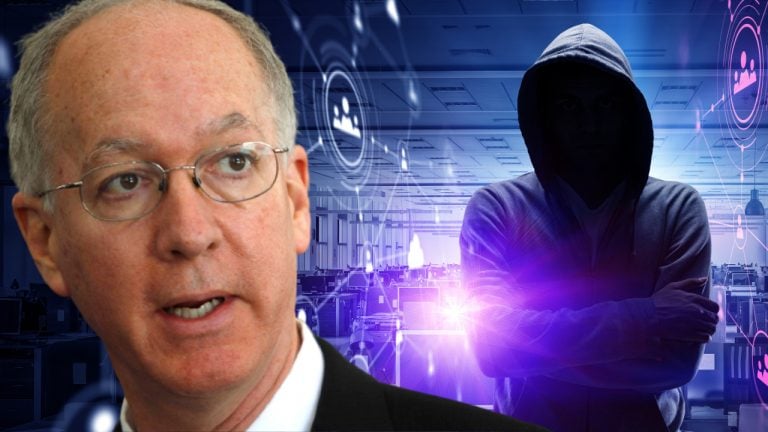
AI tools are not just in the hands of law enforcement and financial institutions. Cybercriminals have access to them, too, and in some cases are building their own. This will complicate things for the public and private sectors, as well as enable criminals to steal, defraud or launder money even faster and at a larger scale.
According to Infosecurity Magazine,
“Generative AI models can be used to make money laundering processes more efficient for financial criminals – for example, by helping to create fake companies, invoices, records and financial statements, find loopholes in legislation and even generate offshore accounts in which to hide funds.”
Less elaborate criminal schemes have also started employing AI. Fraudsters running “pig butchering” romance scams are already using tools like Chat GPT to make more compelling pitches to victims. Adversarial AI tools such as Fraud GPT and Worm GPT are being sold on the Dark Web.
Fraud GPT assists bad actors with “writing malicious code; creating undetectable malware; finding non-VBV bins; creating phishing pages; building hacking tools; finding hacking groups, sites, and markets; writing scam pages and letters; finding leaks and vulnerabilities; and learning to code or hack.”
According to Gary Anderson of Kivu Consulting:
“Cybercriminals and the threat actor community are technologically savvy, motivated and tend to be early adopters of new technology trends when they see advantages and improvement on how they can evolve their tools, techniques and practices.”
Some criminals, on the other hand, are using the promises of AI to falsely lure victims into investment scams. According to a DOJ press release:
“David Gilbert Saffron, 51, of Australia, and Vincent Anthony Mazzotta Jr., 52, of Los Angeles, allegedly conspired to operate a fraudulent scheme to induce victims to invest in various trading programs that falsely promised to employ an artificial intelligence automated trading bot to trade victims’ investments in cryptocurrency markets and earn high-yield profits.” This deceptive practice is also referred to as “AI washing.”
Criminal adoption of AI means that law enforcement, banks and other businesses involved in cryptocurrency must adopt these tools themselves before they’re totally overwhelmed. They also need to engage in public outreach and educate people on security best practices and scam avoidance.
Tim Vasko, the founder of BlockCerts, has articulated a transformative solution: the fusion of AI with blockchain technology to create a fortified and reliable ecosystem for all participants. The concept of Authenticated Intelligence stands at the forefront of BlockCerts’ innovation, merging the immutable proof protocols inherent in blockchain with the sophisticated validation processes that underpins GPT’s technology.
This advanced verification model guarantees that each transaction is not only encrypted but also verified across multiple layers, significantly reducing the risk of fraudulent activities, including money laundering.
Vasko emphasizes the practicality and effectiveness of this approach, stating, “Our strategy transcends theoretical postulation; it is an active, tangible system that reinforces both the conventional realms of business and finance, as well as the dynamics of the cryptocurrency sector, with the indispensable values of integrity and trust.
Authenticated Intelligence is not just a concept—it’s an operational platform, a commitment to ensuring that every transaction adheres to the utmost ethical standards, cultivating a foundation of trust within connected digital ecosystems we all currently operate.”
AI is one of the most powerful tools ever created. The “technological imperative” is the philosophical concept that new technologies are inevitable and essential and must be developed and accepted for the good of society. As such, while we stand to reap the benefits of AI adoption, it is paramount for professionals to stay one step ahead of bad actors both by mitigating risks associated with the use of generative AI and proactively using it to bolster compliance.
For guidance on harnessing the power of AI for your business, contact Katya Gozias at [email protected] or Brendan Cochrane at [email protected].
The post Decoding the Black Box: How AI is unveiling the secrets of crypto money laundering appeared first on CryptoSlate.
origin »Bitcoin price in Telegram @btc_price_every_hour
Global Human Trust (GHT) на Currencies.ru


|