2022-11-2 15:53 |
China’s central bank governor gave an update on the national currency being developed this week Anonymity and privacy will be protected, he argues Our Analyst Dan Ashmore is not so sure, believing these digital currencies are potentially very dystopian Having said that, there are advantages to the nascent concept, too But with China leading the way, there is definite concern about what the end goal will look like
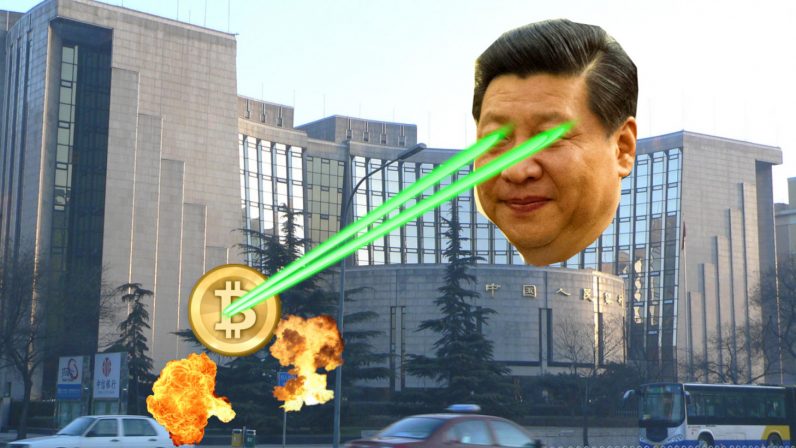
China is at the forefront of state-sponsored cryptocurrencies, known as CBDC’s (central bank digital currencies).
While technological innovation should be applauded, there are some very ominous concerns here. And it feels like they are creeping closer.
Concerns around controlChinese central bank governor, Yi Gang, discussed how advanced the national digital currency was recently at the Hong Kong Fintech Week. Despite insisting that “privacy protection is one of the top issues on the agenda”, the reality is that this will give the Chinese state unprecedented power over its citizens – not that it had a lack of it to begin with.
You see, national currencies mean that, with one flick of a button, wallets (the equivalent of bank accounts) can be frozen. Worse still, they could be drained. The implications are endless here.
The government could introduce an automatic tax system, for example, where funds are drained each year. Or maybe some sort of fine system. The Social Credit System, which is a national credit rating and blacklist that is being developed, could also be integrated with a national currency. With the credit system tracking individuals and businesses for trustworthiness, is it so insane to think financial punishment or reward could be introduced with it?
I wrote about many of the concerns back in April of this year, when I focused on the Sand Dollar of the Bahamas. While it remains concerning, the track record of the Chinese state’s rule, as well as the size of the economy, means the it is on a different level and far easier to imagine a dystopian future.
How will the Chinese CBDC work?Concerns aside, it is fascinating to read about how they work – if not terrifying. Yi gave some insight into the way it is being developed.
His advocation that anonymity would be protected centres around a two-layer payment system. At tier one, the central bank provides yuan to the operators, while only processing inter-institutional information. At tier two, the operators (all of who are authorised) collect only the personal information that is necessary for exchange and circulation of the currency to the individual citizens.
Yi went further, promising that date wil be encrypted and personal sensitive information not shared with third parties. Even more notably, transactions up to a certain level will be allowed to take place under full anonymity.
This definitely seems promising. Again, however, the evidence and history is not on the side of the Chinese state here. In digging further into Yi’s quotes, he did caveat that there would have to be an eye kept on this anonymity:
“We recognize that anonymity and transparency are not black and white, and there are many nuances that need to be carefully weighed. In particular, we need to strike a precise balance between protecting individual privacy and combating illegal activities.”
That balance is the line that is sometimes tough to toe in cryptocurrency. Just recently I wrote about the dangers of decentralisation, yet in this case, it is more a danger of centralisation.
For many, CBDC’s are incredibly dystopian. Obviously, assuming you have read this article until now, I fully see how this can be the case – and overall I am worried about what this could look like down the line in certain states.
Then again, CBDC’s and blockchain technology do have perks. Efficiency, lower fees, higher speed and greater accessibility are all powerful proponents. But the dangers are extremely stark. I guess we will all need to wait and see what happens, but for now it is China that seem to be leading the way – and I’m not sure that is a good thing.
The post China’s national cryptocurrency is getting more ominous appeared first on CoinJournal.
origin »Bitcoin price in Telegram @btc_price_every_hour
Global Cryptocurrency (GCC) на Currencies.ru


|