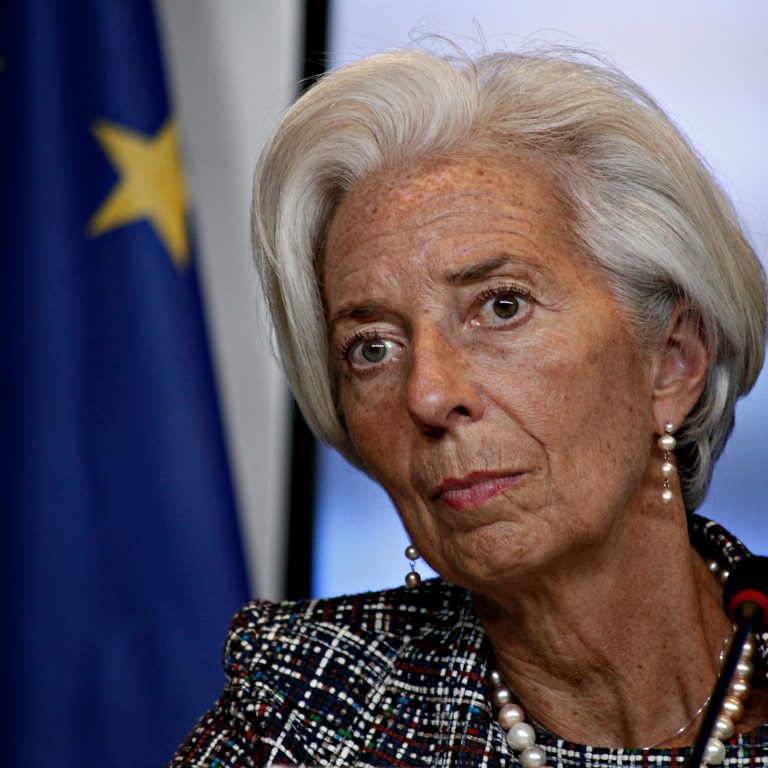
Tao Zhang, Deputy Managing Director of the International Monetary Fund (IMF) has made a strong argument for the development of Central Bank Digital Currency (CBDCs). He asserts that as a new asset class they hold tremendous promise, notably for the developing world.
BENEFITS OF DIGITAL CURRENCY EMPHASIZED
Zhang discussed CBDCs in an address given at a conference hosted by the London School of Economics. He pointed to numerous advantages that these currencies can bring to the financial space, particularly by enabling rapid, seamless transfers and providing financial services for the unbanked.
Notably, however, was his recognition that a revolution is underway across the global economy, and that central banks must innovate in order to avoid being rendered obsolete. Specifically, he asserts that CBDCs have the potential to stem the growing popularity of stablecoins, which he stated “may be difficult to regulate and could pose risks to financial stability and monetary policy transmission.”
Zhang was also quick to point to the challenges that may come with the mass adoption of these assets. Most notably, the current global financial space is not designed to accommodate borderless digital currencies. Thus, one or a select few strong CBDCs could come to dominate the world. He referred to this possibility as “dollarization.”
On the one hand, a CBDC used as an international means of exchange could improve the efficiency of cross-border payments, which are currently costly, slow, and opaque. But at the same time, CBDC available across borders could increase the probability of currency substitution (“dollarization”) in countries with high inflation and volatile exchange rates, and therefore reduce the ability of the central bank to conduct an independent monetary policy.
One interesting suggestion was the possibility of banks creating fiat-backed digital currencies, which Zhang termed “synthetic CBDCs.” Such tokens would enable the banking sector to assume the challenges related to managing these digital assets. For example, enforcing anti-money laundering and know-your-customer regulations. The tokens would, however, have the backing of a trusted central bank.
ADDRESS UNDERSCORES BLOCKCHAIN’S REVOLUTIONARY APPEAL
Over the past several months central banks across the globe have begun aggressively searching for a means to stem the mass adoption of cryptocurrencies such as Bitcoin. CBDCs are not an innovation introduced by these central authorities for the altruistic benefit of their users. Rather, central banks now understand that blockchain assets threaten to render them obsolete, and CBDCs are a desperate attempt to introduce viable competition.
The true challenge for central banks rests with the fact that the open, borderless, and anonymous nature of cryptocurrency cannot be replicated by any centrally controlled asset, even if it were digital. In fact, most fiat currency is already used in digital form. The private banking sector has come to realize this fact, and is now taking steps to form business models around blockchain technology. Perhaps the best move by central banks will be to acknowledge the changes ahead, and begin legitimizing this new asset class rather than seeking to undermine it.
What do you make of the IMF Director’s recent comments on central bank digital currency? Add your thoughts below!
Images via Shutterstock origin »
Researchers at the International Monetary Fund (IMF) have examined the central bank laws of 174 IMF members to answer the question of whether a digital currency is really money. They found that of all the central banks studied, only about 23%, or 40 central banks, “are legally allowed to issue digital currencies.” IMF Explores if […]
The IMF has recently recommended to central banks worldwide to explore the introduction of Central Bank Digital Currencies, but to proceed with caution. CBDC Could Prove Useful to Central Banks In its most recent weekly blog post, the IMF has suggested that CBDC have a number of benefits.
CoinSpeaker
IMF Head Christine Lagarde Calls For Central Banks Digital Currencies
IMF’s Managing Director called for central banks digital currencies, stating that they could provide financial inclusion, security, and consumer protection, which can not be offered by the private sector.
Christine Lagarde, from the International Monetary Fund (IMF), has affirmed that governments and central banks all over the world should work towards setting up their own cryptos. The statement was made at the Singapore Fintech Festival, which is happening this week in Singapore.
Christine Lagarde, the managing director of the International Monetary Fund (IMF), has said central banks throughout the world should consider issuing digital currency to make transactions more secure.
Head of the International Monetary Fund, Christine Lagarde, said that central banks should consider issuing state-backed digital currency. The IMF head gave her advice during a speech delivered at the Singapore Fintech Festival.
Speaking at the Singapore Fintech Festival this week International Monetary Fund head, Christine Lagarde, said that governments and central banks should work towards setting up their own digital currencies.
CEO Ripple, Brad Garlinghouse stood beside IMF Deputy General Counsel, Ross Leckow in a presentation on their opinions on digital currencies during the Singapore Fintech Festival. The pair were asked questions on their views about the current digital asset market and the role of central banks by the audience. Conservative Counsel As a high ranking […]
The International Monetary Fund (IMF) and the World Bank have weighed in on sovereign considerations and global implications of blockchain and other financial services technologies.
The International Monetary Fund (IMF) has exerted pressure on the Marshall Islands to torpedo its proposed crypto. The move by the Washington-based global financial institution has been cited as evidence of the steps central bankers will take to thwart cryptocurrency adoption.
The IMF (International Monetary Fund) has advised against the Republic of the Marshall Islands’ idea to bring in a digital currency as a second legal tender as well as the US dollar.
The Marshall Islands are based in the central Pacific as a remote chain of islands.
Don’t cry! Argentina gets the largest IMF bailout in history. Market creep? Mortgage rates move from 3% to almost 5%. European Central Bank exercises painful political persuasion with Italy. Can Bank of Japan’s unlimited liquidity float the whole world? Thanks for listening to this week’s McAlvany Weekly Commentary. Q1 hedge fund letters, conference, scoops etc, […]
After retreating from late-2025 highs, Bitcoin has spent much of recent trading days fluctuating between the mid-$80,000s and low-$90,000s, with buyers consistently stepping in on dips and sellers defending the same resistance level.
According to a new technical analysis, the Bitcoin price has returned to its “Crash Line,” fueling talk of a possible bullish turnaround. The expert behind this analysis has suggested that this is not a random event, but a deliberate move that could signal the beginning of Bitcoin’s next upward move.
The notorious crypto crash on October 10 of last year sent shockwaves through the market, resulting in the largest liquidation event in history with nearly $20 billion in losses. This catastrophic event ignited significant criticisms and fears among investors regarding the stability of the cryptocurrency market.
With Bitcoin (BTC) prices experiencing a significant recovery this week, analysts are increasingly optimistic about the potential for further rallies. Notably, Gautam Chhugani from Bernstein has declared that the bottom for Bitcoin has already been reached at $80,000, signaling a promising outlook for the digital asset.
The crypto market produced one of its most disappointing performances in the final quarter of 2025, with most large-cap assets ending the year in the red. While prices struggled to make any mark in the last few months of the year, liquidity also continued to seep out of the market. According to the latest on-chain […]
Cardano co-founder Charles Hoskinson has shared an interesting outlook for the crypto market in a recent YouTube interview by Altcoin Daily, projecting a major upside for Bitcoin in 2026 while also outlining a way capital flows into altcoins.
According to a well-known crypto analyst, Bitcoin’s (BTC) long-standing four-year cycle can no longer dictate the direction of the crypto market. For months, both Bitcoin and major altcoins have struggled to regain their previous highs, while traditional markets have flourished.