2026-1-20 22:30 |
Bitcoin could emerge as a long-term winner if global authorities confirm the existence of non-human intelligence, even if the immediate fallout triggers a severe financial shock.
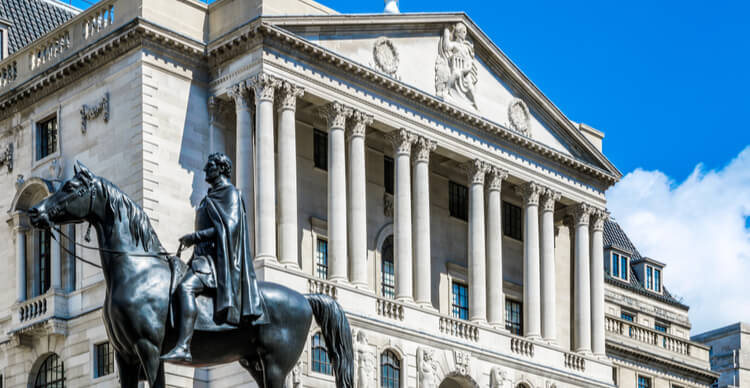
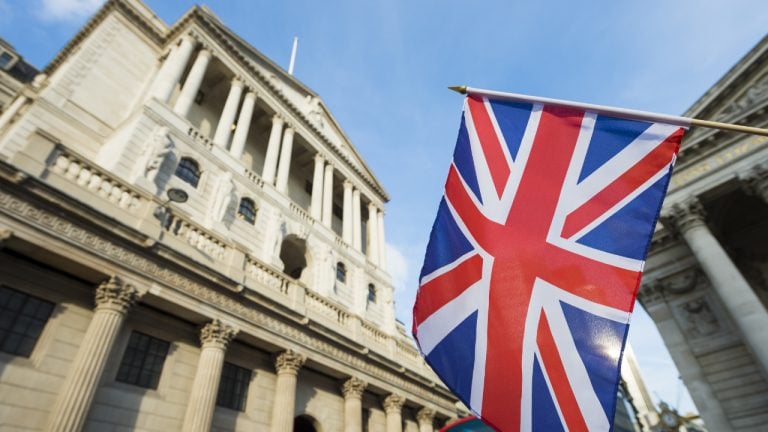
Over the weekend, reports emerged that Helen McCaw, a former senior analyst at the Bank of England, urged Governor Andrew Bailey to consider contingency planning for a scenario in which the US government, or another credible authority, releases definitive evidence that humanity is not alone.
In her analysis, the risk is not just market chaos. It is a fast-moving confidence shock that could propagate from asset prices into the plumbing of everyday life, potentially causing bank runs, payment disruptions, and, in the worst case, civil disorder.
Related Reading “Major US bank blows up from Silver trade” headlines hide the $675M margin shock currently hitting traders Dec 29, 2025 · Liam 'Akiba' Wright Ontological shockMcCaw anchors her case in “ontological shock,” a term increasingly used in risk circles to describe the destabilizing effects of an abrupt shift in shared reality.
In this scenario, collective psychological disorientation translates directly into material economic outcomes.
McCaw, in a Sol Foundation white paper, argued that this situation could lead to a financial instability channel.
She wrote that if UAP (Unidentified Anomalous Phenomena) disclosure implies a “power and intelligence greater than any government,” it could undermine the legitimacy and trust that markets and banking systems rely on in silence.
According to her:
“Confirmation, or even widespread speculation, that new technologies exist would be an exogenous shock to global financial markets. The human reaction could have immediate ramifications in these markets, whether due to speculation or new facts.”
Given these stakes, she argues the Bank of England must “take action” to address disclosure-related financial stability risks.
While the premise resembles science fiction, the cultural context has shifted over the past year.
For context, US lawmakers, including Sen. Kirsten Gillibrand, are increasingly calling for government transparency regarding UAP.
However, the chances of such a disclosure anytime soon appear slim despite high-level political engagement. On Polymarket, a crypto prediction market platform, a contract titled “Will the US confirm that aliens exist before 2027?” trades at approximately 13 cents, implying a 13% probability.
Nonetheless, McCaw’s pitch is essentially that the rising institutional attention and the high-impact consequences of any such confirmation justify planning ahead.
Against that backdrop, CryptoSlate has modeled how an “ontological shock” scenario would likely play out for Bitcoin.
Related Reading Why Bitcoin investors should worry about a 17% fertilizer surge that threatens to blow up the cooling inflation narrative Jan 19, 2026 · Liam 'Akiba' Wright Short-term effectIf this tail event strikes, the immediate question for investors is: What breaks first?
McCaw raises the possibility that the public might rotate toward digital currencies like Bitcoin if they “question the legitimacy of government” and lose trust in sovereign assets.
However, market mechanics suggest a different initial reaction. Alien disclosure is fundamentally an uncertainty shock, and uncertainty shocks trade in two distinct phases.
In Phase 1, which could last from hours to days, the market faces a “sell what you can” problem.
In the first window after a high-credibility, reality-rewriting announcement, markets usually do not behave like rational discounting machines. They behave like risk managers and margin clerks.
Three reasons suggest Bitcoin is vulnerable immediately, even if it later benefits from a “distrust hedge” narrative.
First, Bitcoin is liquid 24/7, which makes it the first pressure valve. When equities are closed, and headlines hit, crypto is where global traders can instantly cut exposure. That makes BTC a frequent source of “instant liquidity,” not an automatic safe haven.
Second, correlations rise when everyone de-risks together.
The IMF has repeatedly documented that crypto and equity markets have become more interconnected. This means that market spillovers in returns and volatility can increase, especially around stress episodes, undermining diversification when you need it most.
Third, volatility is not priced for civilization-scale surprises.
As of mid-January 2026, the VIX (one of the market’s most-watched measures of implied US equity volatility) has been in the mid-teens. If disclosure reprices volatility upward sharply, risk limits tighten, VaR (Value at Risk) shocks ripple, and levered positions unwind.
In those moments, “digital gold” narratives often lose to “reduce gross exposure now.”
Put bluntly, the first move is likely to be risk-off, and Bitcoin will be treated as high beta by many macro desks.
Related Reading Bitcoin and gold draw closer as correlation with dollar and equities weakens Feb 18, 2025 · Andjela Radmilac Long-term implications for gold and BitcoinIt is only in Phase 2, lasting weeks to months, that the trade might shift to the “trust premium” McCaw envisions.
After the first scramble, the question changes from “what’s liquid?” to “what’s legitimate?”
If confirmation of non-human intelligence is interpreted as proof that governments were not fully transparent or not fully in control, then a chunk of the public and investor base could start demanding assets that feel less tied to state credibility.
That is where Bitcoin can plausibly move from “sold for liquidity” to “bought for exit optionality.”
In this case, the disclosure would trigger sustained distrust in institutions, which could force some investors to seek an asset that is borderless, self-custodiable, and not a claim on any bank.
If capital controls or emergency measures become part of the political response, even briefly, the “censorship-resistance” narrative becomes more than branding. It becomes a risk-management feature.
However, McCaw raises a crucial point regarding traditional safe havens like gold.
She suggests that if markets speculate that spacefaring capabilities could expand the supply of precious metals (via asteroid mining or new material sciences), gold’s scarcity narrative faces a theoretical challenge.
Related Reading When Aliens find BTC: After humanity's extinction, Bitcoin will preserve our collapse Nov 26, 2025 · Liam 'Akiba' WrightIn that context, Bitcoin faces no such physical risk as its scarcity is mathematically enforced. Essentially, the top crypto protocol’s 21 million hard cap remains immutable.
So, in a world where the physical constraints of the universe are suddenly up for debate, the rigid, unyielding certainty of Bitcoin’s code could command a massive premium.
The post Bitcoin could be your only liferaft as Bank of England experts brace for alien disclosure chaos appeared first on CryptoSlate.
origin »Bitcoin price in Telegram @btc_price_every_hour
Time New Bank (TNB) на Currencies.ru


|