2023-5-13 15:24 |
Florida has become the first U.S. state to pass legislation prohibiting the use of Central Bank Digital Currencies (CBDCs).
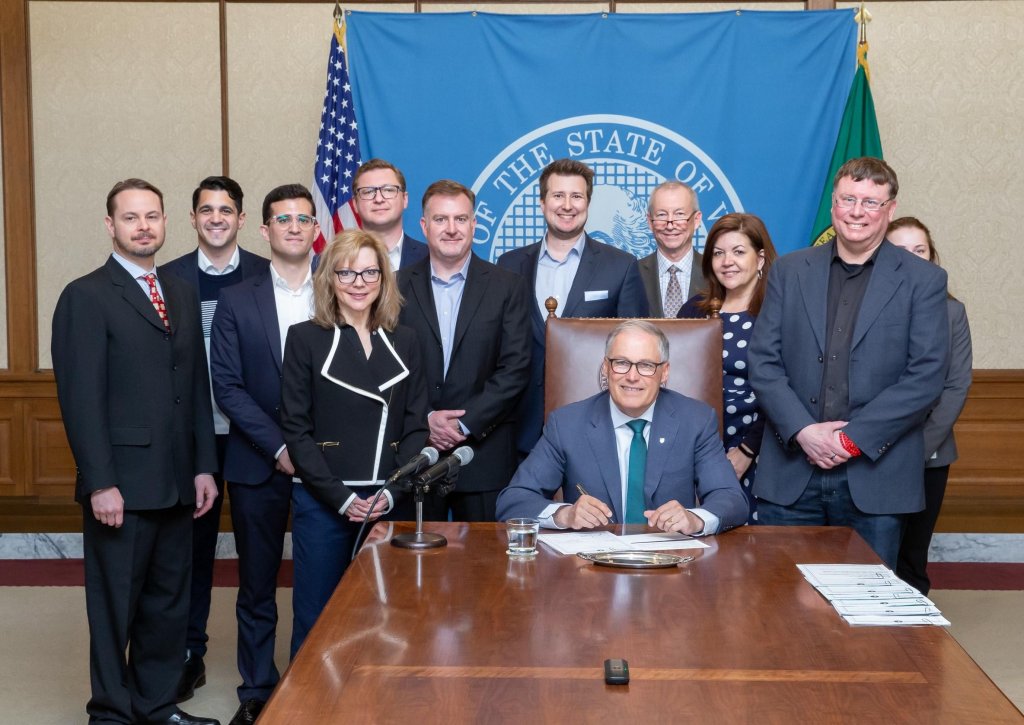
The governor of Florida and Republican presidential candidate Ron DeSantis announced the news via Twitter on Friday. In a tweet, he said the legislation will prevent central bank-issued digital currencies from being recognized by the state.
CBDCs Under Spotlight Ahead of 2024 ElectionAlthough the Florida bill applies to all CBDCs, DeSantis’ rhetoric targets the Biden administration’s efforts to establish a digital dollar.
“The legislation I signed today makes Florida the first state in the nation to protect individuals from government surveillance in their personal finances through a CBDC,” his tweet stated.
And DeSantis isn’t the only politician making a stand against centralized digital currencies.
In an emerging dividing line in American politics, Florida’s anti-CBDC stance posits technology as a form of government surveillance. In this school of thought, popular among libertarian wings of the Republican party, CBDCs undermine the ability to transact in private while handing too much power to central banks.
Moreover, Republicans’ animosity toward what they perceive as Washington’s overbearing economic policy runs deeper than resistance to centralized digital currencies.
In a graphic published in March, DeSantis called on other Republican-led states to join his crusade against CBDCs. Specifically, he challenged members of the 20-state coalition against environmental and social governance (ESG) to adopt similar measures.
Announced in March, the alliance was formed to push back against President Biden’s ESG agenda. Claiming that such initiatives undermine the free market, DeSantis has said that they threaten the stability of the U.S. economy.
Arguing against ESG business frameworks, he called out “woke executives who put their political agenda ahead of their client’s finances.”
The CounterargumentWhile Florida Republicans may posit their resistance to Democrat-led economic policies in terms of a war on woke, across the financial sector, banks and other key players are anticipating a CBDC-based payment system as part of the natural evolution of fiat money.
Meanwhile, authorities in Democrat-controlled states like New York have gone ahead with their own digital dollar pilots.
For example, back in November, the Federal Reserve Bank of New York announced its intention to launch a proof-of-concept project to explore the interoperability of wholesale CBDCs and commercial bank digital money.
Florida CBDC Ban: A Boon For Bitcoin?Intentionally or not, Florida’s efforts to slow the global adoption of CBDCs play into the hands of crypto evangelists and Bitcoin enthusiasts.
Since their inception, decentralized cryptocurrencies have been posited by some users as a means of protecting economic autonomy. In fact, recent moves to implement CBDC payment systems are the antithesis of Satoshi Nakamoto’s original vision for Bitcoin.
And even to this day, many proponents of cryptocurrency still advocate for the disintermediation of central and commercial banks.
Accordingly, the advent of CBDCs could be viewed as the mainstream recuperation of a once-disruptive technology. Although often built on technological principles pioneered by cryptocurrencies like Bitcoin, CBDCs run counter to their spirit of decentralization.
That is to say, they represent digital currencies’ absorption into the fold of centralized government control.
Innovation and the Free MarketIn the minds of DeSantis and his allies, CBDCs’ threat to privacy and their threat to FinTech innovation go hand in hand.
As well as enabling government surveillance of citizens’ finances, CBDCs also transfer responsibility for administering digital currencies. Instead of being left to the free market, under a CBDC system, control is passed to the state.
And according to the principles of economic libertarianism, such a transfer inevitably stifles innovation and disempowers the private sector.
And neither is the debate over CBDCs and the free market limited to the United States.
In Canada, the leader of the Conservative party Pierre Poilievre has said that he would quash the Bank of Canada’s foray into digital currency if he became Prime Minister.
Arguing that state-backed digital currencies are akin to nationalization, his campaign has made the case that digital currency innovation is best left to private enterprises.
A vocal crypto advocate, Poilievre told reporters last year that:
“Canada needs less financial control for politicians and bankers and more financial freedom for the people.”
He emphasized that his belief includes “freedom to own and use crypto.”
Under the current administration, Canada’s crypto policy has taken a tough stance against platforms that trade and sell digital assets.
In fact, on Friday, Binance announced that it is shutting down its services in the country. Blaming an unfavorable regulatory climate, the exchange has stated that its Canadian business is no longer tenable.
It will now withdraw from the market until the situation improves.
The post Florida Becomes First US State to Pass Anti-CBDC Legislation appeared first on BeInCrypto.
origin »Bitcoin price in Telegram @btc_price_every_hour
Blockpass (PASS) на Currencies.ru


|